Trade Compliance Training for Heavy Machinery
Heavy machinery manufacturers operate in a highly regulated global environment. Export controls, sanctions exposure, and complex supply chains create compliance risks that extend across engineering, procurement, and logistics.
Skill Dynamics helps enterprise teams build the capability to manage trade compliance effectively. From export classification to sanctions screening, we enable consistent, confident decision-making across global operations.
Request a consultation with a trade compliance learning specialist!
Get in touch with the team.Global Trade Complexity. Real Compliance Exposure.
Trade compliance in heavy machinery manufacturing is shaped by how products are designed, sold, and delivered across global markets.
Dual-use components, embedded software, and engineering collaboration can all fall under export controls such as EAR, while distributor networks and project-based sales models increase exposure to sanctions risk and regulatory change.
For many organisations, the challenge isn’t awareness. It’s maintaining consistent, compliant decision-making across teams, regions, and operational workflows.
Where Trade Compliance Capability Breaks Down
Most compliance failures aren’t caused by a lack of policy. They’re caused by inconsistent capability across the organisation.
Engineering, procurement, and logistics teams often interpret requirements differently, leading to misclassification, missed sanctions risk, and uncertainty around licensing and origin.
Over time, these gaps compound. Risks are identified too late, decisions vary across teams, and regulatory exposure increases across global operations.
The Skill Dynamics Trade Compliance Academy
A structured, enterprise-ready approach to building trade compliance capability across global teams.
Unlike traditional compliance training, the Skill Dynamics Academy builds consistent decision-making capability across roles, regions, and real operational scenarios, not just regulatory knowledge.
This is not generic training. It is a structured capability system designed for complex, regulated environments.
Role-Aligned Learning Pathways
Training is aligned to the responsibilities of engineering, procurement, logistics, and compliance teams, ensuring decisions are made with the right level of regulatory understanding.
Competency-Based Curriculum
The curriculum is structured around core compliance capabilities, including export classification, sanctions screening, import regulations, and technology transfer controls.
Scenario-Based Learning for Real Trade Decisions
Teams learn through realistic scenarios such as classifying machinery components, assessing sanctions risk, and managing export licensing requirements.
The focus is on application, not theory.
Continuous Regulatory Updates and Reinforcement
Trade regulations evolve constantly. Training is continuously updated to reflect changes in export controls, sanctions regimes, and global compliance requirements.
Explore how this could work in your organization.
Learn More.Core Trade Compliance Capabilities for Heavy Machinery
Effective trade compliance in heavy machinery manufacturing depends on consistent capability across classification, sanctions, and global trade decision-making.
These capabilities ensure compliance risks are identified early, managed effectively, and controlled across engineering, procurement, and logistics functions.
Anti Corruption
Build a culture of integrity with training on FCPA, UK Bribery Act, antiboycott rules, forced labor, and whistleblowing - so your teams can spot red flags and act with confidence.
Security
From cybersecurity to CUI and NISPOM, our security courses equip your teams to safeguard sensitive data, uphold national security standards, and stay clearance-ready.
Sanctions and Embargoes
Stay compliant with evolving sanctions and embargoes - from OFAC and DDTC to UN and EU measures - empowering leaders to manage risk and practitioners to make informed, compliant decisions.
Import
Navigate U.S., country-specific, and global import rules with confidence. From customs requirements to classification and valuation, to keep goods moving and compliant.
Export
Master U.S. and global export controls, including EAR, ITAR, OFAC, and country-specific regulations, to ensure compliant, confident trade across borders.
Enterprise Delivery & Oversight
Building trade compliance capability is one thing. Delivering it consistently across a global organisation is another.
The Skill Dynamics Trade Compliance Academy is designed for enterprise deployment, giving organisations full visibility and control over how compliance capability is developed, measured, and sustained.
Global Deployment Across Teams
Deliver consistent training across engineering, procurement, logistics, and compliance functions, ensuring alignment in how trade decisions are made.
Skills Diagnostics & Benchmarking
Assess current compliance capability, identify gaps, and prioritise development based on regulatory exposure and operational risk.
Executive Visibility & Reporting
Provide leadership teams with clear insight into capability progression, engagement, and areas of compliance risk.
Certification & Audit Tracking
Maintain structured records of training and certification to support internal governance and external regulatory audits.
Measurable Business Impact for Heavy Machinery Companies
Trade compliance capability isn’t just about meeting regulatory requirements. It directly reduces risk, improves decision-making, and strengthens operational control.
For heavy machinery organisations, stronger capability leads to more consistent compliance across global operations.
The impact is visible across day-to-day decisions and long-term regulatory exposure:
Reduced export control risk
Improve classification accuracy and licensing decisions across machinery, components, and embedded technologies.
Stronger sanctions compliance
Identify and manage exposure across customers, distributors, and project partners before risk escalates.
Improved audit readiness
Maintain structured records and consistent decision-making to support regulatory audits and internal reviews.
Fewer compliance errors across teams
Reduce inconsistencies in decision-making across engineering, procurement, and logistics functions.
Greater confidence in global trade decisions
Enable teams to make informed, compliant decisions across exports, imports, and technology transfers.
Implementation & Ongoing Support
Rolling out trade compliance capability across a global heavy machinery organisation requires structure, alignment, and visibility from day one.
Skill Dynamics follows a clear approach to ensure capability is built, applied, and sustained across your teams.





Frequently Asked Questions
Heavy machinery manufacturers face risks across export controls, sanctions exposure, global supply chains, and technology transfers, particularly where products include controlled components or software.
Export controls such as EAR and ITAR can apply to machinery, components, and embedded technologies, depending on classification and destination.
Classification determines whether export licences are required and what restrictions apply to specific components, systems, or technologies.
Yes. Structured training improves classification accuracy, decision-making, and risk awareness across teams, reducing the likelihood of violations.
Sharing controlled technical data with foreign nationals can trigger export controls, requiring teams to understand licensing requirements and internal controls.
Most organisations can begin rollout within weeks, scaling progressively across teams and regions.
Speak With a Trade Compliance Learning Specialist
Trade compliance in heavy machinery manufacturing requires consistent capability across engineering, procurement, logistics, and compliance teams.
Skill Dynamics works with global organisations to build trade compliance capability that reduces risk, improves decision-making, and supports confident global trade.
If you’re looking to strengthen compliance capability across your organisation, now is the time to take a structured approach.
Request a consultation with a trade compliance learning specialist
Contact UsLatest
Whitepapers
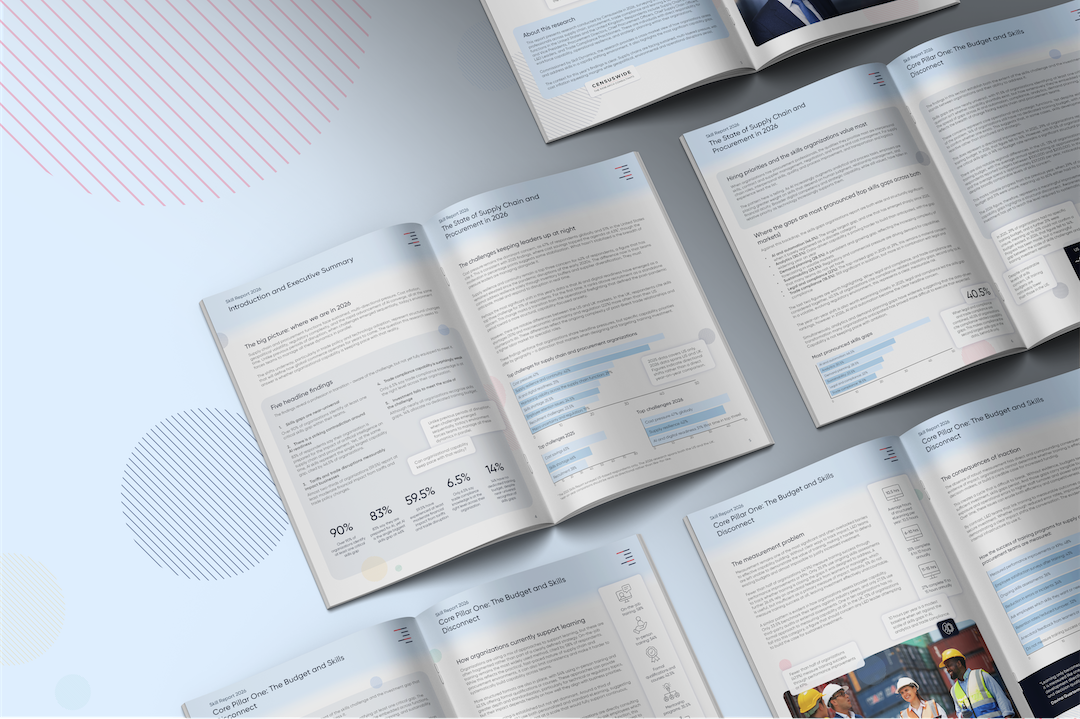
Skills Report 2026
The Skills Report 2026, based on insights from senior decision-makers across the US and the UK, highlights an industry increasingly aware of the challenges it faces, but not yet moving fast enough to meet them.
Whitepapers
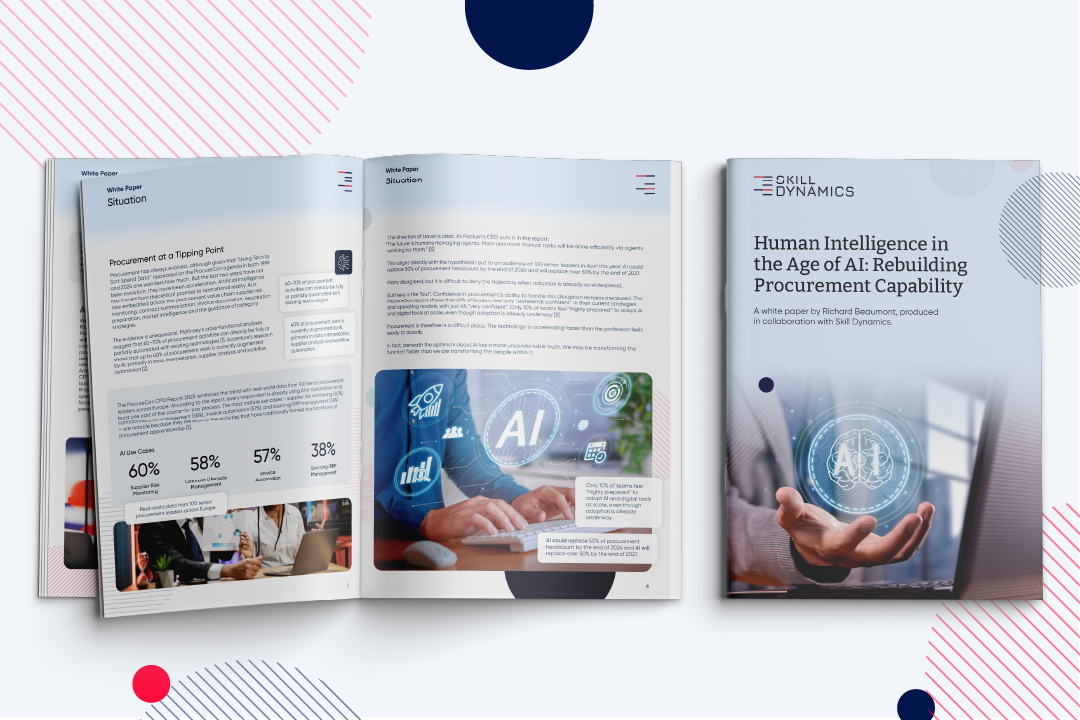
Human Intelligence in the Age of AI: Rebuilding Procurement Capability
We partnered with Richard Beaumont to combine deep practitioner insight with cutting-edge learning solutions. Richard’s extensive experience in procurement leadership, coupled with Skill’s expertise in building role-based, AI-enabled development programs, allows us to explore the human challenges behind technological acceleration.
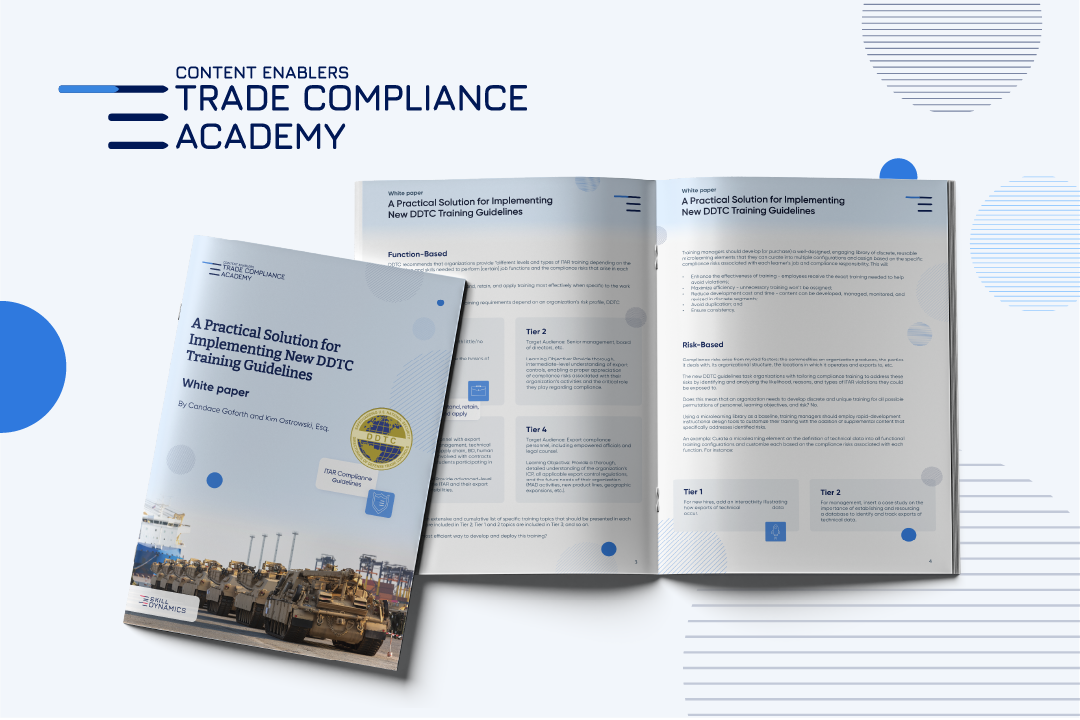
Whitepapers
A Practical Solution for Implementing New DDTC Training Guidelines
This white paper outlines a practical approach to meeting DDTC’s updated ITAR training.