Trade Compliance Training for Pharmaceutical Organizations Driving Compliance at Scale
The pharmaceutical trade operates under strict global regulation. Cross-border movement of products, materials, and data must meet compliance requirements that directly impact product integrity, audit outcomes, and patient safety.
Skill Dynamics helps enterprise teams build the capability to manage trade compliance consistently across global operations, reducing risk while improving decision-making at scale.

Why Trade Compliance Training Matters in Pharma and Life Science
The pharmaceutical supply chain is vast, global, and complex. From R&D and clinical trials to production and distribution, your teams face compliance risks every day:
Exporting sensitive drug formulas, clinical trial data, or medical devices.
Partnering with overseas research institutions and distributors.
Navigating U.S. sanctions, restricted party lists, and end-use/end-user restrictions.
Ensuring compliance when transferring controlled software or technology.
A single misstep can mean fines, reputational damage, or delays in bringing life-saving products to market. Training empowers your people to spot and mitigate risks before they escalate.


Role-Specific, Industry-Relevant Learning
Unlike generic compliance programs, our training is designed with pharma and biotech professionals in mind. Employees across your organization – from scientists and engineers to logistics, sales, procurement, and leadership – gain awareness of how compliance impacts their daily responsibilities.
For compliance teams: In-depth knowledge of classification, jurisdiction, authorizations, and export clearance.
For general employees: Awareness of how their actions (emails, shipments, data sharing) can create compliance risks.
For global operations: Guidance tailored to both U.S. and non-U.S. learners managing exports, sanctions, and corruption risks.
Training scenarios reflect real-life challenges your teams face in labs, manufacturing plants, and global supply chains, ensuring relevance, retention, and practical application.
The Operational & Regulatory Landscape in Pharmaceuticals
Trade compliance in pharmaceutical organisations is shaped by global regulatory frameworks, including FDA, EMA, and GxP requirements, alongside export controls and international trade regulations.
Products, components, and data move across borders under strict controls, requiring accurate classification, documentation, and licensing decisions. At the same time, organisations must maintain full traceability while managing complex global supply chains.
The challenge is not just understanding regulations. It is applying them consistently across procurement, logistics, engineering, and compliance teams in day-to-day operations.
Where Capability Gaps Create Risk
In pharmaceutical trade environments, small gaps in compliance capability can quickly escalate into regulatory exposure.
Teams across procurement, logistics, and compliance often interpret requirements differently. Export classifications vary. Documentation is inconsistent. Risks are not always identified until late in the process.
Over time, these gaps increase audit exposure, create delays in cross-border movement, and reduce confidence in compliance across global operations.
The Skill Dynamics Trade Compliance Academy
A structured, enterprise-ready approach to building trade compliance capability across pharmaceutical organisations.
Unlike traditional compliance training, the Skill Dynamics Academy develops consistent decision-making capability across roles, regions, and regulated environments, not just knowledge of regulations.
This is a system designed for organisations that need to maintain control across global trade, not just complete training.
Practical Application
Learners apply global controls through realistic tasks like identifying license exceptions or drafting justifications. Training is built around real workflows and always reflects the latest BIS, DDTC, OFAC, EU, and other global regulatory guidance.
Guided Processes
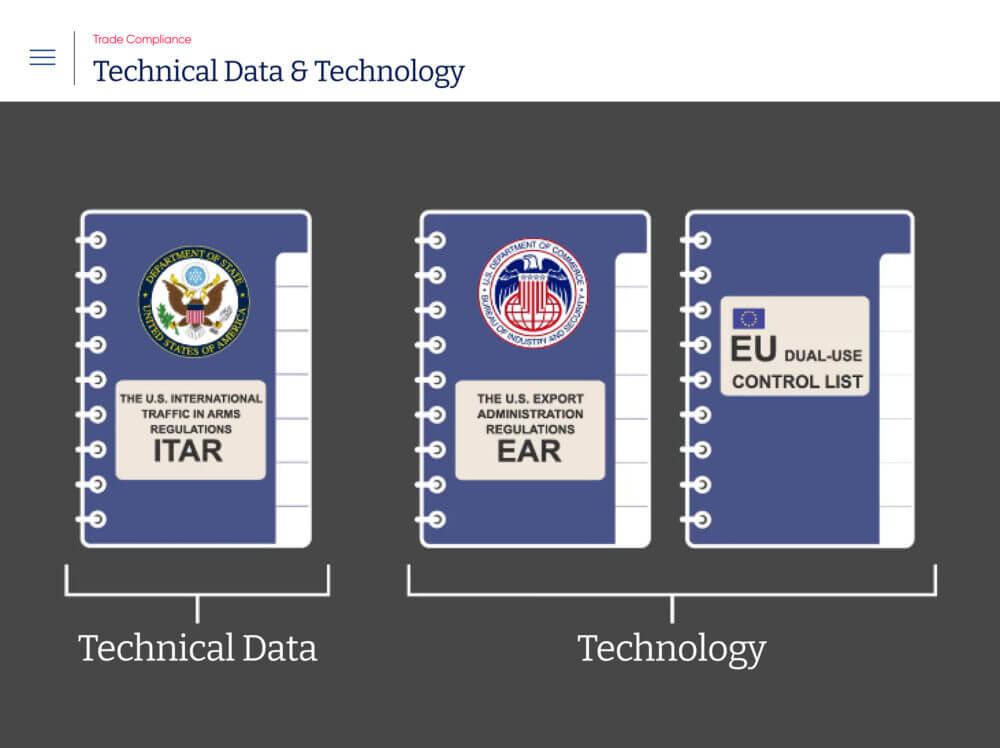
Courses walk learners through essential decision-making sequences - like the Order of Review - helping them determine jurisdiction, classify items, and assess license requirements accurately. These guided processes combine step-by-step instruction with real-world examples to ensure confident, compliant execution.
Compliance Frameworks
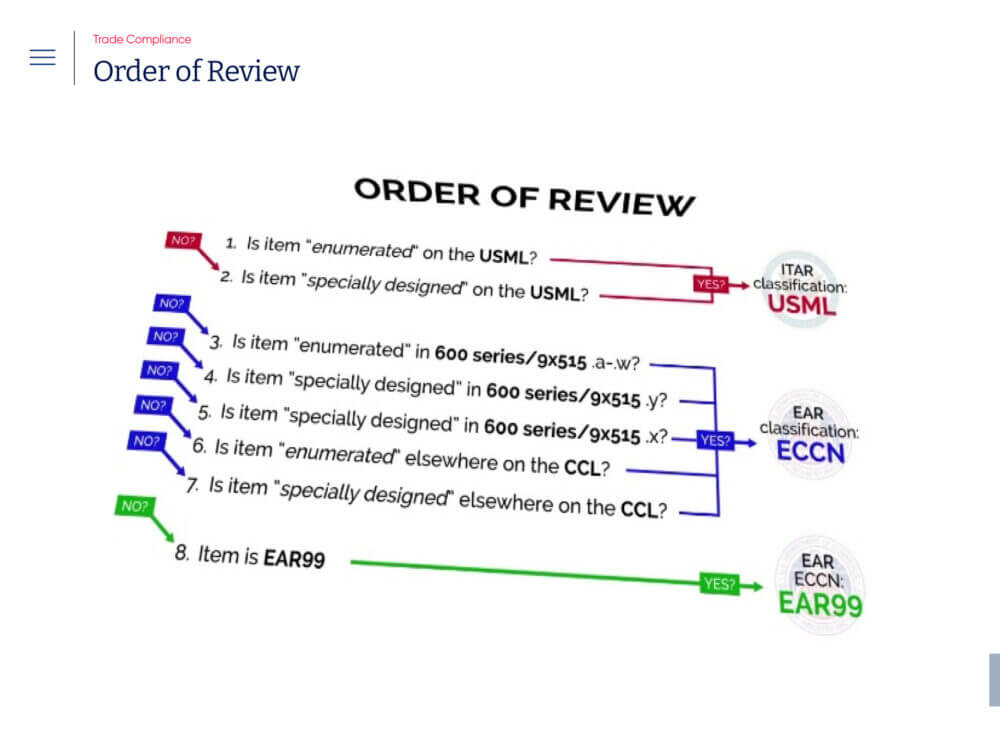
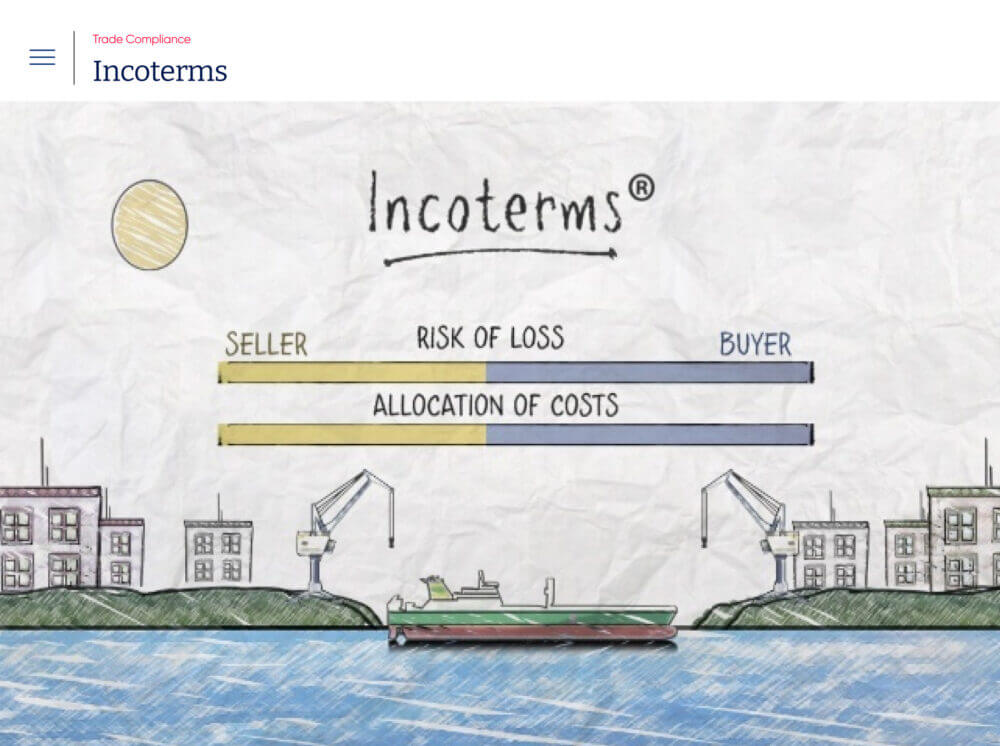
Courses provide practical decision-making frameworks that help learners navigate complex trade-offs - like balancing risk, loss, and cost allocation in buyer-seller communications. From classification workflows to screening protocols, each tool is grounded in current U.S. regulations to support sound, consistent compliance decisions on the job.
Retention Tests
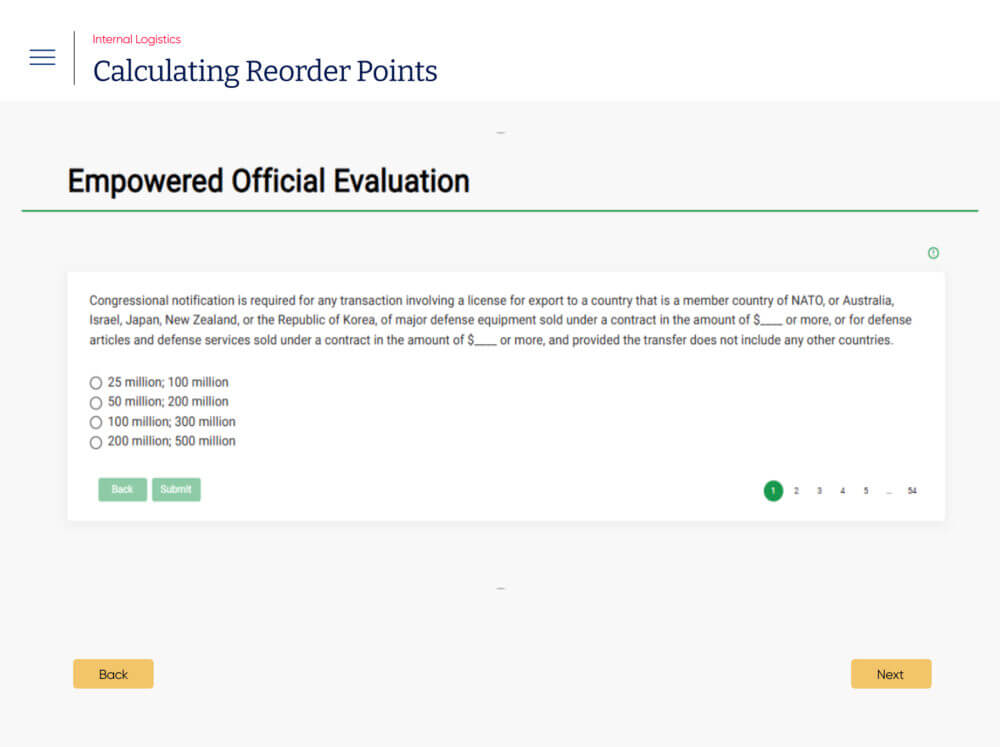
Key concepts are reinforced through interactive scenarios that require learners to apply their knowledge in context. From classifying items under the USML or CCL to identifying red flags in export transactions, learners build real-world readiness, not just theoretical understanding.
The Skill Dynamics Supply Chain Academy
A structured, enterprise-ready approach to building supply chain capability across pharmaceutical organisations.
Unlike traditional supply chain training, the Skill Dynamics Academy is designed to build consistent decision-making capability across roles, regions, and regulated environments, not just deliver isolated courses.
This is not generic training. It is a structured capability system designed for complex, compliance-driven supply chains.
Role-Aligned Learning Pathways
Training is aligned to procurement, logistics, compliance, and supply chain roles, ensuring decisions are made with the right level of regulatory understanding.
Competency-Based Curriculum
The curriculum is structured around core compliance capabilities, including export controls, classification, documentation, and audit readiness.
Applied, Scenario-Based Learning
Teams learn through real-world scenarios such as managing export documentation, assessing regulatory risk, and handling cross-border shipment decisions. The focus is on real-world application.
Continuous Updates & Reinforcement
Trade regulations evolve continuously. Training is updated to reflect changes in export controls, sanctions regimes, and regulatory requirements.
Explore how this could work in your organisation
If your business is planning bold changes, or already in the middle of them, make sure your people have the tools to deliver.
Core Supply Chain Competencies for Pharma and Life Sciences
High-performing pharmaceutical supply chains are built on structured capability across planning, sourcing, logistics, and regulatory control.
These competencies ensure products are delivered safely, compliantly, and consistently across global operations.
Anti Corruption
Build a culture of integrity with training on FCPA, UK Bribery Act, antiboycott rules, forced labor, and whistleblowing - so your teams can spot red flags and act with confidence.
Security
From cybersecurity to CUI and NISPOM, our security courses equip your teams to safeguard sensitive data, uphold national security standards, and stay clearance-ready.
Sanctions and Embargoes
Stay compliant with evolving sanctions and embargoes - from OFAC and DDTC to UN and EU measures - empowering leaders to manage risk and practitioners to make informed, compliant decisions.
Import
Navigate U.S., country-specific, and global import rules with confidence. From customs requirements to classification and valuation, to keep goods moving and compliant.
Export
Master U.S. and global export controls, including EAR, ITAR, OFAC, and country-specific regulations, to ensure compliant, confident trade across borders.
Implementation & Ongoing Support
Building trade compliance capability across a pharmaceutical organisation requires alignment across teams, processes, and regulatory requirements from day one.
Skill Dynamics follows a structured approach to ensure capability is built, applied, and sustained across your teams.




Frequently Asked Questions
Yes. Training is aligned to your regulatory environment, processes, and organisational structure.
Capability is measured through diagnostics, assessments, and reporting that track progression, consistency, and performance.
Yes. The platform provides structured records to support audit readiness, certification tracking, and compliance documentation.
Yes. Training is designed to support cross-functional teams involved in trade and compliance decisions.
Content is continuously updated to reflect regulatory changes and emerging compliance risks.