Supply Chain Training for Heavy Machinery Manufacturers
Heavy machinery supply chains operate under constant pressure. Long global component pipelines, demand volatility, and complex product configurations make planning and sourcing decisions difficult to get right.
In this environment, small gaps in capability quickly translate into operational risk.
Skill Dynamics helps supply chain teams build the capability to improve forecasting, strengthen supplier performance, and drive consistent operational outcomes across global operations.
Request a consultation with a supply chain learning specialist!
Get in touch with the team.Complex Supply Chains. High Consequence Decisions
Supply chains in heavy machinery manufacturing are structurally complex. Large fabricated components move across global networks. Lead times stretch across months and demand is often shaped by infrastructure cycles, commodities, and regional investment patterns.
At the same time, aftermarket parts networks must remain responsive while managing variability in demand. Supplier bases are often concentrated, increasing exposure when disruption occurs.
For many organisations, the challenge isn’t visibility. It’s managing complexity while maintaining control across planning, sourcing, and delivery.
This approach translates into the core capabilities supply chain teams need to operate effectively in complex, high-pressure environments.
Where Supply Chain Capability Breaks Down
Most supply chain teams don’t struggle because they lack systems. They struggle because decision-making capability is inconsistent.
Forecasts vary in accuracy across regions. Planning assumptions aren’t always aligned. Procurement and supply chain teams operate in silos. Supplier risk is identified late, when options are limited.
Over time, this creates a gap between plan and execution. Inventory levels rise, service performance becomes unpredictable, and margin pressure increases.
The Skill Dynamics Supply Chain Academy
A structured, enterprise-ready approach to building supply chain capability across global teams.
Unlike traditional supply chain training, the Skill Dynamics Academy is designed to develop consistent decision-making capability across roles, regions, and operational environments, not just deliver isolated courses.
Trusted by global supply chain teams to build capability consistently at scale.
Role-Aligned Learning Pathways
Training is aligned to specific supply chain roles, including planners, buyers, supply chain managers, and procurement leaders. Each pathway focuses on the decisions individuals are responsible for every day.
Competency-Based Curriculum
The curriculum is structured around core supply chain capabilities, including forecasting, supplier management, sourcing strategy, and planning discipline. Skills build progressively across levels.
Applied, Scenario-Based Learning
Teams learn through realistic scenarios that reflect heavy machinery supply chains. Forecasting under uncertainty. Managing supplier constraints. Balancing inventory and service levels.
The focus is on application, not theory.
Continuous Updates & Reinforcement
Supply chain conditions change quickly. Training is continuously updated to reflect new risks, market conditions, and operational challenges, with reinforcement built in to sustain capability over time.
Explore how this could work in your organization.
Learn More.Core Supply Chain Capabilities for Heavy Machinery
High-performing supply chain teams in heavy machinery aren’t built on systems alone. They’re built on structured capability across planning, sourcing, and operational decision-making.
These capabilities work together to improve forecast accuracy, reduce disruption, and maintain control across complex, global supply chains.
Transportation and Logistics
Teams learn how to keep the full cycle moving: promising, scheduling, shipping, invoicing, without missing a beat.
Supply Planning
When supply doesn’t match demand, everything slows down. This competency helps teams plan smarter, from scheduling production to managing distribution networks, so they can stay one step ahead.
Sustainability
Sustainability isn’t a bolt-on; it’s built into the decisions teams make daily. This competency helps learners reduce environmental impact while keeping supply chains resilient and aligned to ESG goals.
Warehousing
A good warehouse setup makes everything else run smoother. We help teams improve layouts, stay accurate, and run safer, more efficient day-to-day operations.
Order Management
It’s not just about getting the order, it’s everything that follows. Teams learn how to keep the full cycle moving: promising, scheduling, shipping, invoicing, without missing a beat.
Project Management
From planning to execution, this module builds the skills needed to lead supply chain initiatives. Teams learn how to scope projects, build time plans, manage risk, and create business cases that get buy-in.
Strategy
Go beyond firefighting. Using the SCOR framework and real-world case examples, learners develop the tools to design high-performing supply chain strategies that drive sustainable, long-term value.
Procurement
Procurement and supply chain can’t work in silos. We show teams how to build better connections between sourcing and operations so the right things show up at the right time, from the right suppliers.
Manufacturing
Understand the processes and strategies that define modern manufacturing. From production environments to supply chain design impacts, this module connects factory-floor reality with broader planning decisions.
Legal Training
No supply chain professional operates in a vacuum. This module builds confidence in handling contracts, navigating compliance, and understanding the regulations that shape procurement and operations.
Inventory Management
Stock too much, and you waste money. Stock too little, and you lose sales. This module teaches teams how to strike the right balance.
Finance
Demystify the numbers behind supply chain performance. From P&L accounting and total cost of ownership to inventory valuation and the cash-to-cash cycle, this module gives learners the financial fluency to drive better decisions.
Demand Planning
Get to grips with forecasting methods, managing uncertainty, and integrating demand signals into sales and operations planning. Teams learn how to build reliable plans that hold up under pressure.
Analytics
Learn how to turn data into decisions. This module covers the analytics strategies supply chain professionals need to spot trends, increase efficiency, reduce costs, and build a real competitive edge.
Enterprise Delivery & Oversight
Building supply chain capability is one thing. Delivering it consistently across a global organisation is another.
The Skill Dynamics Supply Chain Academy is designed for enterprise deployment, giving organisations full visibility and control over how capability is developed, measured, and sustained.
Deployment Across Global Teams
Deliver consistent training across regions, plants, and supply chain functions, ensuring alignment in how decisions are made across the organisation.
Skills Diagnostics & Benchmarking
Assess current capability levels, identify gaps, and prioritise development areas based on operational requirements.
Executive Visibility & Reporting
Provide leadership teams with clear insight into engagement, capability progression, and supply chain performance.
Certification & Audit Tracking
Maintain structured records of learning and certification to support governance, compliance, and internal audit requirements.
Measurable Business Impact for Heavy Machinery Manufacturers
Supply chain capability isn’t just a training outcome. It’s a driver of operational performance.
For heavy machinery organisations, stronger capability directly improves planning accuracy, supplier reliability, and cost control across the supply chain.
The impact is visible across day-to-day operations and long-term performance:
Improved forecast accuracy
Make more reliable planning decisions in environments shaped by volatility and long lead times.
Reduced inventory exposure
Lower excess stock and working capital while maintaining service performance.
Stronger supplier performance
Improve reliability and responsiveness across critical suppliers.
Faster, more consistent decision-making
Reduce delays caused by misalignment between planning, procurement, and operations.
Greater resilience to disruption
Respond more effectively to demand shifts, supplier issues, and global supply chain risk.
Implementation & Ongoing Support
Rolling out supply chain capability across a global heavy machinery organisation requires structure, alignment, and visibility from day one.
Skill Dynamics follows a clear approach to ensure capability is built, applied, and sustained across your teams.





Frequently Asked Questions
Most organisations can begin rollout within weeks, with deployment scaled progressively across regions and functions.
Yes. Training is aligned to your supply chain structure, operational environment, and organisational priorities.
Capability is measured through diagnostics, assessments, and reporting that track progression, engagement, and decision-making consistency.
Yes. Cross-functional learning improves alignment between planning, sourcing, and operational decision-making.
Yes. The programme is designed for environments with configurable products, long lead times, and global supplier networks.
Training is delivered through a scalable platform that enables consistent access across regions, roles, and functions.
Speak With a Supply Chain Learning Specialist
Heavy machinery supply chains require more than systems. They require consistent capability across planning, sourcing, and operational decision-making.
Skill Dynamics works with global organisations to build supply chain capability that improves forecasting, strengthens supplier performance, and delivers measurable operational results.
If you’re looking to strengthen supply chain performance across your organisation, now is the time to take a structured approach.
Start with a conversation and see where your supply chain capability stands today.
Start with a conversation.
Request a consultation with a supply chain learning specialist
Contact UsLatest
Whitepapers
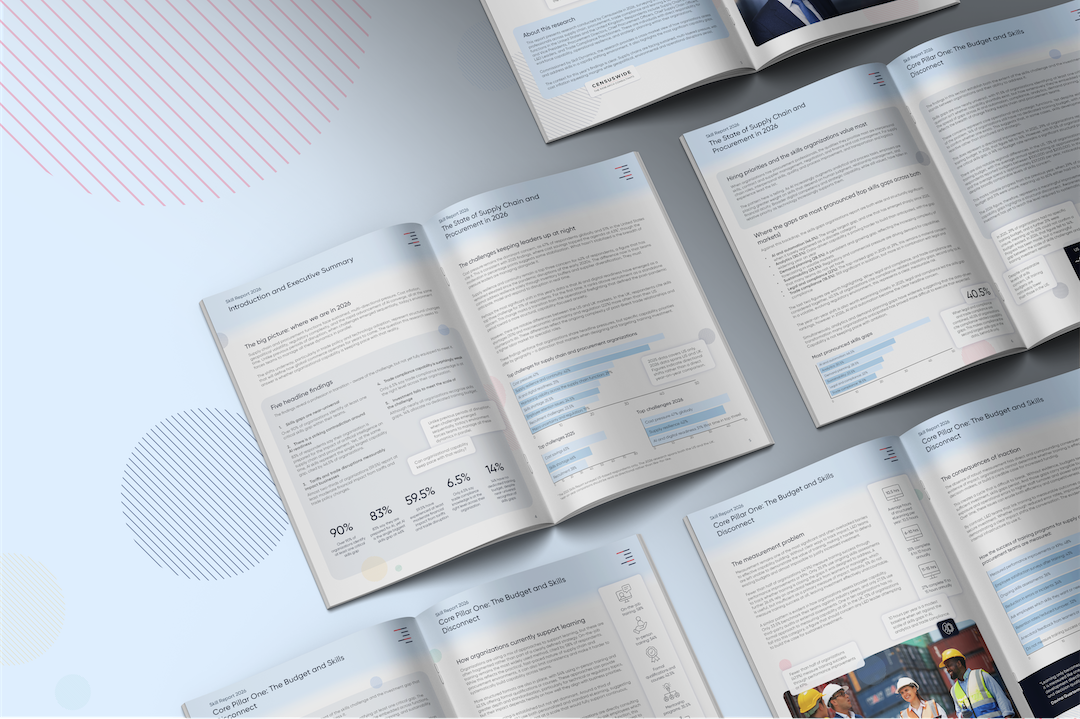
Skills Report 2026
The Skills Report 2026, based on insights from senior decision-makers across the US and the UK, highlights an industry increasingly aware of the challenges it faces, but not yet moving fast enough to meet them.
Whitepapers
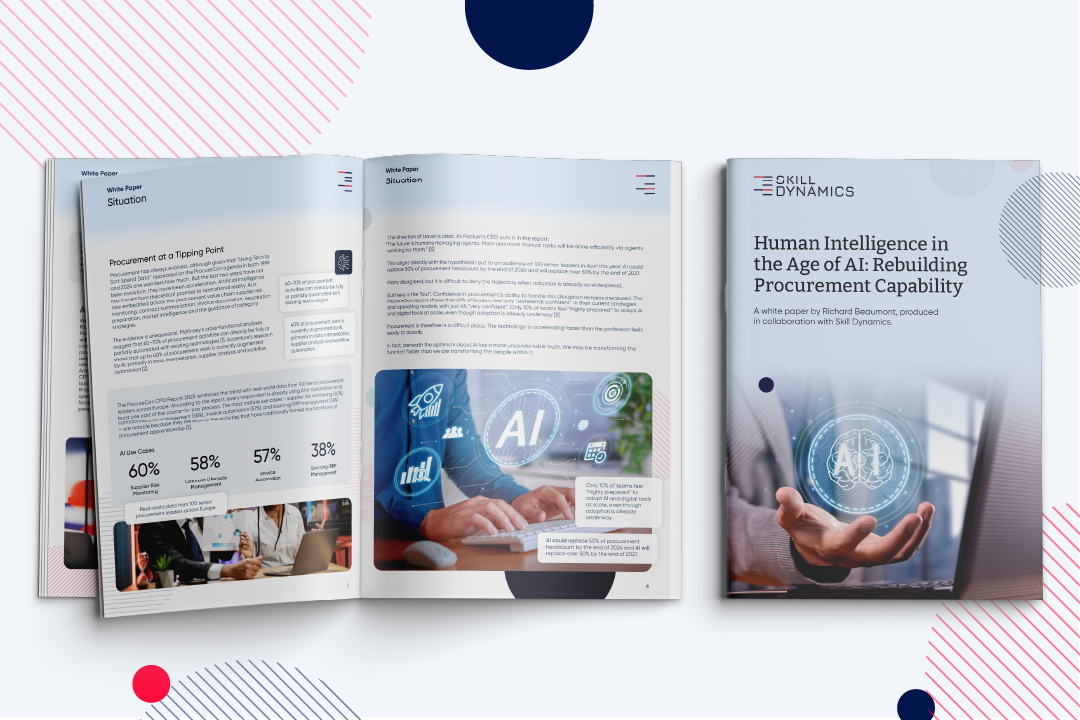
Human Intelligence in the Age of AI: Rebuilding Procurement Capability
We partnered with Richard Beaumont to combine deep practitioner insight with cutting-edge learning solutions. Richard’s extensive experience in procurement leadership, coupled with Skill’s expertise in building role-based, AI-enabled development programs, allows us to explore the human challenges behind technological acceleration.
Whitepapers
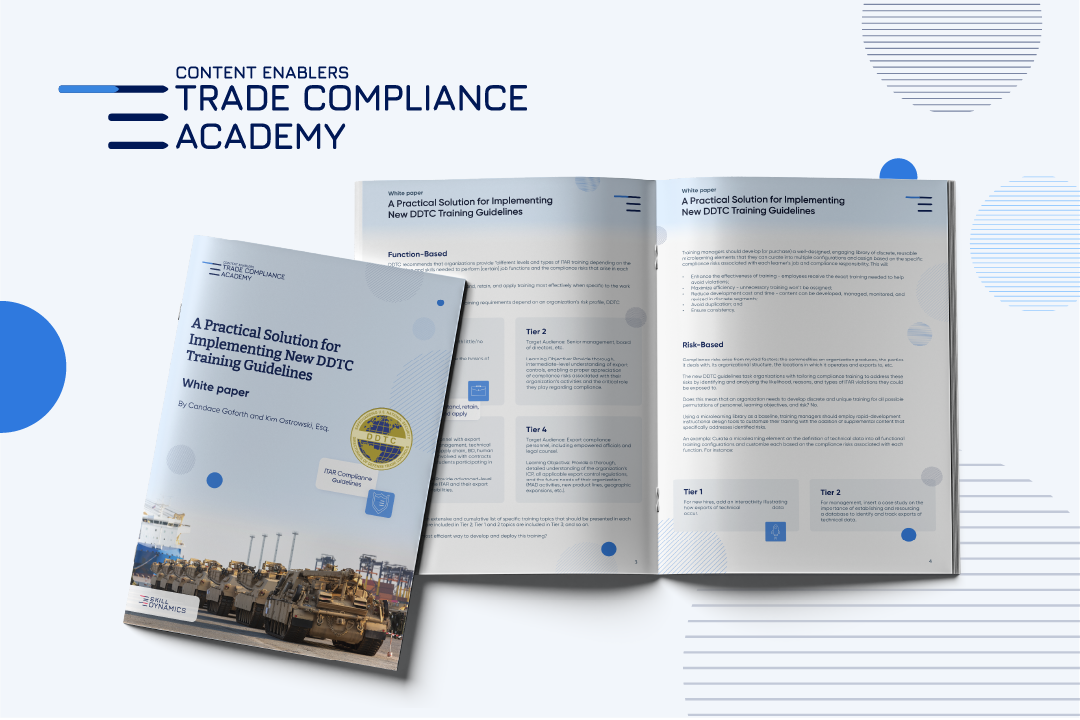
A Practical Solution for Implementing New DDTC Training Guidelines
This white paper outlines a practical approach to meeting DDTC’s updated ITAR training.